


Prison Break: Stick Story
ABI GAMES PTE. LTD.
I went into Prison Break: Stick Story expecting a quick escape game built around obvious choices, and that is exactly where its appeal lies. You guide a stick character through prison-themed situations, make a decision, see the immediate result, and try again when the outcome goes wrong. It is an adventure game, but not the kind that asks you to learn a large map or manage a complicated inventory. Its focus is the small moment before a choice: do I take the direct option, try something suspicious, or choose the route that looks harmless?
That simple setup makes it easy to understand within seconds. It also explains why I could play it in short bursts without needing to remember a long plot. The game comes from ABI GAMES PTE. LTD. and is free to start, with optional purchases priced from $2.99 to $6.99 per item. It is aimed at Everyone, so the tone stays light and cartoon-like rather than becoming a serious prison drama.
How the escape loop feels in actual play
The first action is always easy to understand
The strongest part of the opening experience is how quickly the game puts a decision in front of me. I do not have to spend several minutes learning a control scheme before anything happens. The stick character is placed in a dangerous or awkward situation, and the game asks me to choose what happens next. That direct start suits the prison escape theme because the character always seems to be one decision away from either progress or trouble.
Related News

FPS Strike Ops: Modern Arena - A New Force in FPS Gaming

FPS Strike Ops: Modern Arena – Redefining Mobile FPS Gaming
These choices are the main form of interaction. Rather than relying on fast reflexes, the game tests whether I can read the situation and guess which option fits the scene. Some choices feel sensible, while others are deliberately tempting because they might produce a funny failure. I like that the game does not make every wrong answer feel like a serious punishment. A failed attempt usually becomes part of the entertainment, which encourages experimentation instead of making me afraid to select an unusual option.
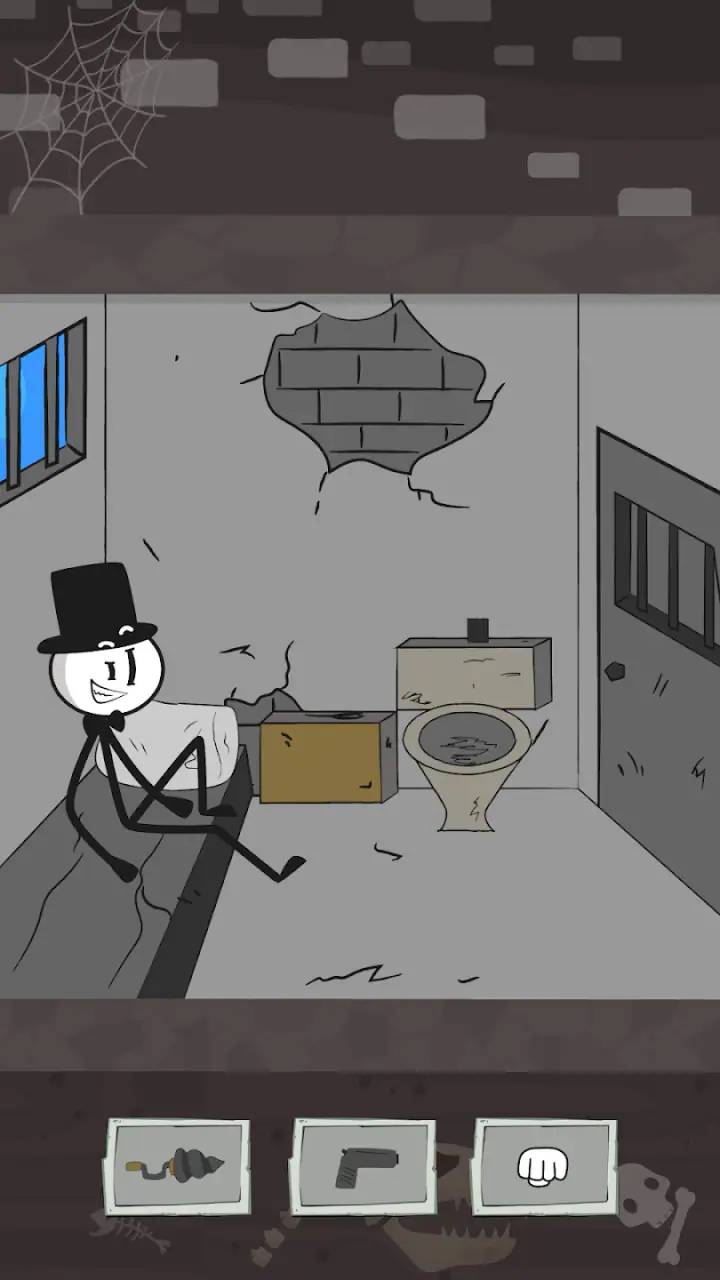
The visual simplicity helps here. The stick-figure presentation keeps attention on the action and the choice itself. I am not trying to admire a detailed environment or track several characters at once. The prison setting provides a clear reason for the decisions, while the stripped-down art makes the reactions easy to read. For a game designed around quick choices, that is more useful than elaborate decoration would be.
Related News

Why WhatsApp Messenger Still Makes Everyday Communication Feel Easy

Jurassic World: The Game Is the Better Dino Tycoon for Strategic Players

Threads in Real Life: Who Should Join, Lurk, or Leave

How SHEIN Turned Shopping Into an Endless Content Feed

How to Make Fortnite Feel Smarter on Mobile

Should You Switch to Microsoft Outlook on Mobile?
One practical tip is to pause for a moment before selecting the most obvious answer. The first option that sounds safe is not always the most interesting one, and the game gets much of its personality from seeing how a slightly strange decision plays out. I also found it useful to treat the first attempt as reconnaissance. Instead of worrying about completing a scene immediately, I could learn what the game considers a clever solution and then use that knowledge on the next try.
Feedback arrives immediately, which keeps the loop moving
The feedback rhythm is the reason the game feels more active than a simple sequence of menus. After I choose, the result follows quickly: the character may move closer to freedom, trigger a setback, or end up in a humorous situation. That short distance between action and consequence gives each decision a satisfying shape. I never have to wait through a long loading phase or a complicated explanation to understand whether my choice worked.
This rhythm also makes mistakes useful. When a choice fails, I can usually identify the connection between the option and the result. That does not mean every outcome is perfectly predictable, but the game gives enough visual and situational feedback to make another attempt feel worthwhile. The failure is not just a dead end; it is a clue about the scene.
Gallery
I especially appreciated this when playing for a few minutes during a break. In a longer adventure, stopping after a failed puzzle can feel frustrating because I may need to retrace a large section. Here, the action is compact enough that I can try a different answer almost immediately. The game works well for a short commute, a waiting room, or the few minutes before going to sleep, provided I am comfortable with a light, repetitive style of play.
The trade-off is that the same quick feedback can make the experience feel shallow if I play for too long in one sitting. Once I understand that the main pleasure comes from testing choices and watching the consequences, the surprise can fade. I would not choose this as my only adventure game for a long evening. It is better at creating a chain of small discoveries than at delivering a deep, sustained campaign.
Rewards are tied to curiosity more than mastery
The reward in this game is not complicated equipment or a large character-building system. The immediate reward is seeing the escape continue, discovering a successful route, and watching the stick character react to the situation. That design keeps the focus on the story-like sequence rather than on collecting a large set of resources.
For me, the most enjoyable reward was finding out what happened after choosing an option that looked risky. A successful decision gives a sense of progress, while an unsuccessful one can still be entertaining enough to justify the attempt. This is an important distinction: the game does not rely entirely on winning to make a choice feel worthwhile. The reaction itself often provides the payoff.
That structure makes it suitable for players who enjoy interactive stories but do not want lengthy dialogue or demanding puzzles. It is also a reasonable introduction for someone who finds traditional adventure games intimidating. You can understand the basic objective immediately, and the game does not require advanced gaming skills to begin making progress.
On the other hand, players who need a strong sense of long-term achievement may find the rewards limited. If your ideal adventure includes a detailed inventory, character upgrades, branching conversations, or a world to explore freely, this is a much smaller experience. It is closer to a chain of compact decision scenes than to a full-scale prison simulation. That is not a flaw by itself, but it is an important expectation to set before installing it.
The free entry point helps reduce the risk of trying it. Optional purchases are present, so anyone who dislikes in-game spending should pay attention before confirming a purchase. I would approach those options as conveniences rather than as the reason to play. The core appeal is the choice-and-consequence loop, and that should be what determines whether the game suits you.
Resetting after failure is part of the design
The reset is where the game becomes especially approachable. When a decision leads to failure, I am not pushed into a long recovery process. I can return to the choice and test another possibility. This keeps the cost of curiosity low, which is important in a game where some options are designed to be tempting precisely because they might go wrong.
I found that the reset changed the way I played. In a conventional puzzle adventure, I might save a decision for later because I do not want to damage my progress. Here, I was more willing to choose the option that seemed unpredictable. If it failed, I had learned something. If it worked, I had the satisfaction of discovering a route without needing a guide.
A useful way to play is to separate progress attempts from curiosity attempts. On the first pass through a situation, I usually choose the option that seems most likely to move the character forward. Once I know the successful route, I can revisit the scene and test alternatives for their different reactions. This approach avoids turning every level into random tapping while still leaving room for experimentation.
The reset also makes the game friendly to younger players. Because the content rating is Everyone and the presentation is playful, a child or casual player can understand that a failed choice is simply a reason to try again. I would still recommend that adults supervise purchases on a shared device, as I would with any free game that includes optional items, but the basic gameplay itself is easy to approach.
The limitation is that repetition becomes noticeable when the same scene has been fully understood. Once I know which choice works, replaying the failed alternatives may have less value unless I enjoy collecting every possible reaction. The reset is excellent for removing frustration, but it cannot by itself create deeper variety. Players who want one definitive solution and then a new challenge may move through the content quickly.
Why another session begins
The reason I started another session was rarely the promise of a complex reward. It was the unfinished question left by the previous choice. If the character escaped one obstacle, I wanted to see what the next one would involve. If I failed, I wanted to test the alternative. That is a modest but effective form of momentum.
The game also benefits from its low commitment. I can open it without preparing for a long play session, make several decisions, and stop after reaching a natural pause. The prison escape theme gives those short sessions a clear direction, while the stick-figure style keeps the tone relaxed. It is easy to imagine playing it while waiting for food, taking a short break from work, or sharing the phone with someone who wants to guess the next choice.
In a shared setting, the game can become a small discussion exercise. One person can read the situation and another can choose the option, then both can react to the result. That works better here than in a game dominated by precise controls because the central question is what the character should do. It is a simple way to make the decision loop feel more social without requiring multiplayer features.
I would not recommend starting a session when you are looking for a serious narrative or a difficult strategic challenge. The game is intentionally immediate and playful. It offers quick situations rather than a detailed examination of prison life, and the escape theme is used as a setting for choices rather than as a realistic simulation. If you want a large adventure world, a more demanding puzzle game will probably hold your attention longer.
How it compares with other casual adventures
Compared with a traditional point-and-click adventure, this game removes much of the searching and item combination. You are not wandering through a large environment trying to identify every usable object. That makes it faster to learn, but it also means there is less room for the slow satisfaction of solving a multi-step puzzle.
Compared with an action escape game, it asks less of your reflexes. The challenge is mainly judgment and curiosity rather than timing. Someone who struggles with fast controls may prefer this format, while an experienced action player could find the pace too gentle. The game sits in a middle space: it has the forward motion of an escape story, but the interaction is closer to a sequence of illustrated decisions.
It is also more approachable than a large narrative adventure because it does not demand a major time investment before the premise becomes clear. The cost of that accessibility is depth. There is less character development, less world-building, and less opportunity to shape a long-term strategy. I see it as a companion game for short sessions, not a replacement for a full adventure title.
The large audience is understandable: the game has passed one hundred million installs and holds a 4.7 average from around 381 thousand ratings, with roughly 1.7 thousand written reviews. Those figures suggest that the quick, choice-driven format has broad appeal, but they do not change my personal conclusion that its best use is casual play. Popularity makes it worth trying; it does not make the limitations disappear.
Device expectations and practical fit
The game supports Android devices running version 6.0 or later, which covers a wide range of older and newer phones. That makes it more accessible than games that demand a recent operating system or high-end hardware. Since the presentation is visually simple and the sessions are compact, it feels naturally suited to a phone rather than a tablet or console-style setup.
I would install it on a device used for casual gaming, especially if I wanted something that could be understood without headphones, a controller, or a long uninterrupted session. The game’s structure means that I can focus on the screen for a short time and put it down without losing the thread of a complicated system.
Still, anyone who dislikes repeated attempts should think carefully before choosing it. The loop depends on trying, failing, resetting, and trying again. That process is the entertainment, not an inconvenience around it. If you prefer games where every action has a permanent consequence, the forgiving reset may feel too soft. If you enjoy testing possibilities without heavy penalties, it is one of the game’s clearest strengths.
My verdict on the action, feedback, reward, and reset
After spending time with it, I see Prison Break: Stick Story as a focused casual adventure built around one reliable loop: choose an action, receive an immediate reaction, gain progress or information, reset after a mistake, and begin again because the next outcome is still uncertain. The loop is easy to grasp, and the prison escape setting gives each decision enough context to feel more meaningful than a random quiz.
Its best qualities are accessibility, quick feedback, and a low penalty for experimentation. It is a good fit for casual players, younger users, people who enjoy humorous escape scenarios, and anyone who wants a game that can be played in small pieces. The lack of complex controls also makes it a comfortable choice when I want to relax rather than concentrate on rapid movement.
Its weaknesses are equally clear. The decision system is not deep enough for players seeking elaborate puzzles, and the compact format can become repetitive during long sessions. Optional purchases may also be a consideration for households that want to keep all spending tightly controlled. I would skip it if I wanted a realistic prison story, a large explorable world, or a demanding adventure with layered progression.
For everyone else, the free starting point makes the decision straightforward: try a few escape situations and see whether the feedback loop makes you want to retry. If the pleasure of the game comes from discovering what a choice does, you will probably understand its appeal quickly. If you need more depth after the first successful route, it may be better used as a short break between larger games.
ABI GAMES PTE. LTD. has kept the concept deliberately simple, and in my experience that simplicity is both the hook and the boundary. The game does not ask to become your main adventure world. It asks for a choice, shows you the consequence, and gives you a reason to try once more. For that specific purpose, it is an enjoyable and approachable escape game.
It first arrived on March 17, 2021, and the current version is 1.64. Those details matter mainly for identifying the release you are considering, while the real decision is whether this compact loop matches your habits. My recommendation is positive for short, playful sessions, with the clear warning that players looking for depth should choose a fuller adventure experience instead.
FAQs for Prison Break: Stick Story
What is the main objective of Prison Break: Stick Story?
Prison Break: Stick Story is a thrilling escape game where players take on the role of a stick figure aiming to escape a high-security prison. The primary objective is to solve puzzles, navigate through various obstacles, and make strategic decisions to successfully break free without getting caught by the guards.
Is Prison Break: Stick Story available on both Android and iOS devices?
Yes, Prison Break: Stick Story is available for download on both Android and iOS platforms. Users can find the game on the Google Play Store for Android devices and the Apple App Store for iOS devices, ensuring compatibility across a wide range of smartphones and tablets.
Are there in-app purchases in Prison Break: Stick Story?
While Prison Break: Stick Story is free to download and play, it does offer optional in-app purchases. These can enhance the gaming experience by providing additional tools, hints, or unlocking new levels. However, the game can still be enjoyed fully without making any purchases.
What age group is Prison Break: Stick Story suitable for?
Prison Break: Stick Story is designed for a broad audience, typically suitable for players aged 12 and up. Due to its strategic gameplay and puzzle-solving elements, it may require critical thinking, making it ideal for teens and adults who enjoy challenges and adventure.
Does Prison Break: Stick Story require an internet connection to play?
Prison Break: Stick Story can be played offline, which means users do not need a continuous internet connection to enjoy the game. However, certain features, like in-app purchases or updates, may require internet access to enhance the overall gaming experience.
Pros
- Engaging storyline keeps players hooked.
- Intuitive controls enhance gameplay experience.
- Varied levels offer challenging puzzles.
- Visually appealing graphics for a stickman game.
- Free to play with optional in-game purchases.
Cons
- In-app ads can be disruptive to gameplay.
- Requires internet connection for certain features.
- Limited character customization options.
- Some levels may feel repetitive.
- Progress can be slow without purchases.


